

Laser source vs. veg tan
Bigger isn't always better
Laser Source vs. Leather: Why Your Hobby Laser Might Just Kick Ass
When looking into laser engraving leather, conventional wisdom on the internet says you need a massive, expensive industrial machine to get good results. But if you tick exactly the same way I do, you don’t just take the internet's word for it. I am as curious as a cat, and tinkering is something I simply can't help—I just need to know.
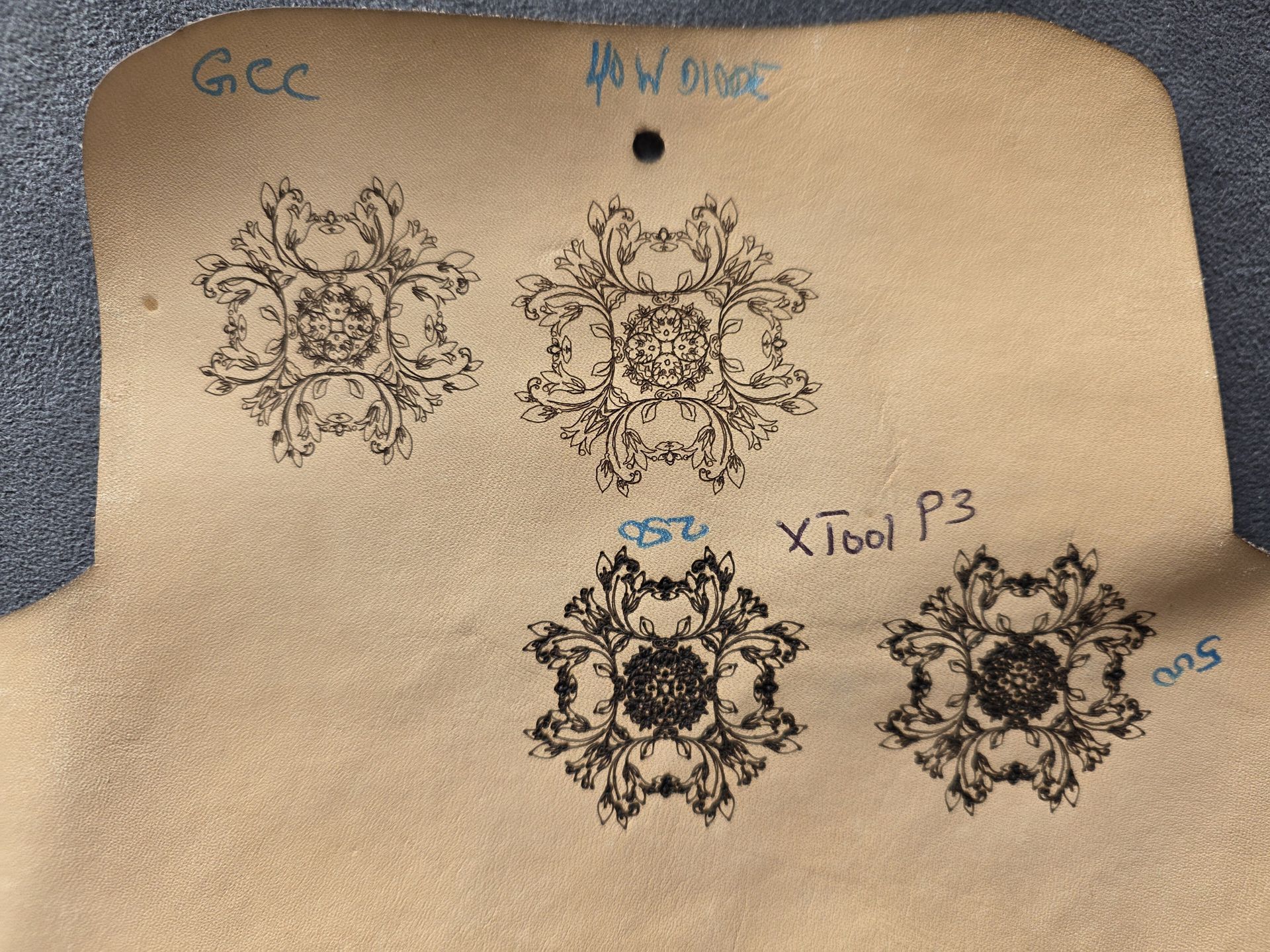
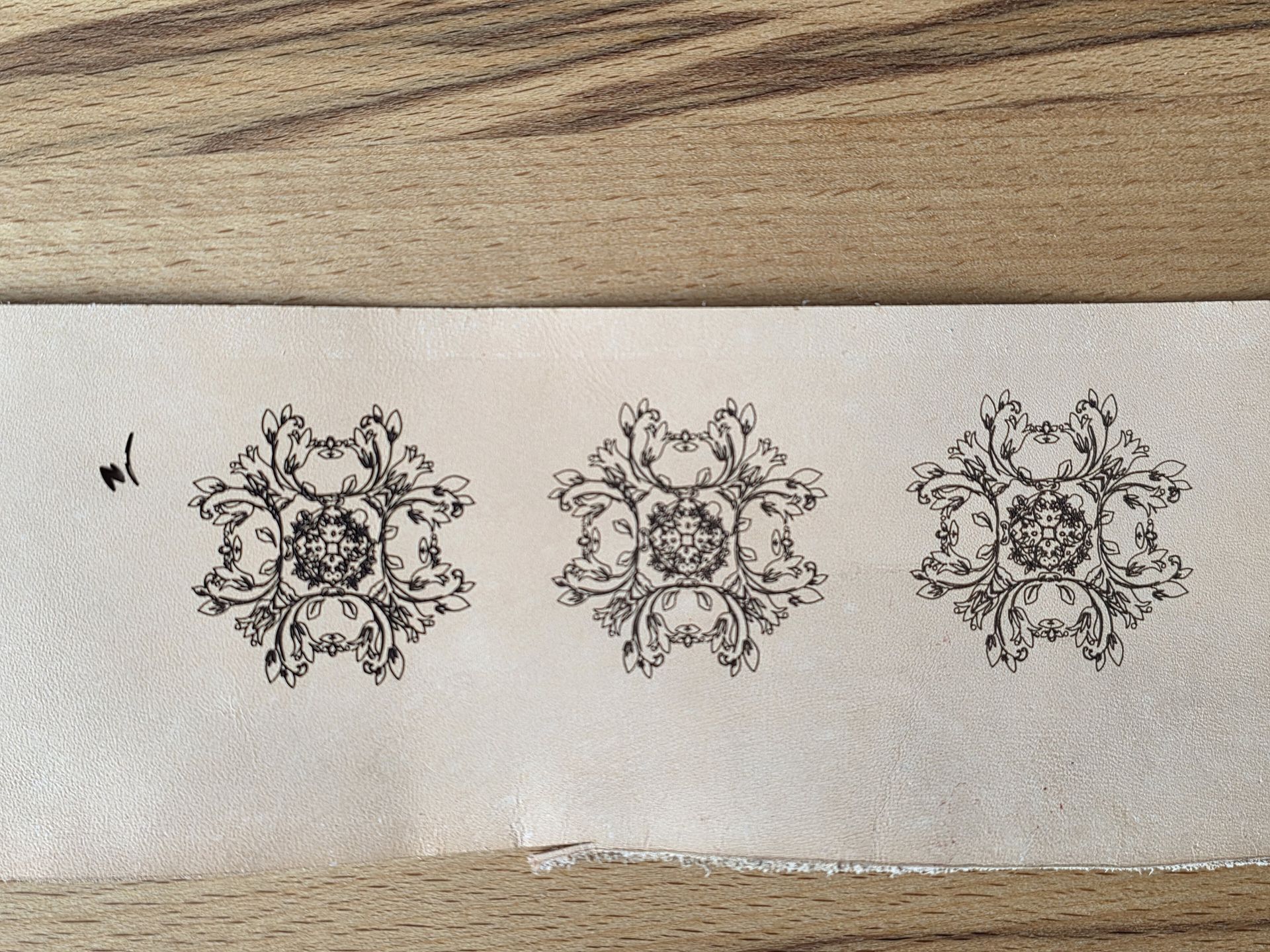
To satisfy that burning curiosity, I ran an experiment: I took the exact same piece of intricate line art and put it side-by-side across three completely different tiers of laser technology. When you zoom in on the macro shots, the real-world results completely flip the corporate "expensive is always better" narrative right on its head.
If you are a hobbyist wondering if your desktop setup can handle high-quality leather work, the short answer is: absolutely. In fact, when it comes to fine lines, bigger isn't always better. The secret lies in a technical concept called minimum fire threshold—and here is what my tinkering revealed.
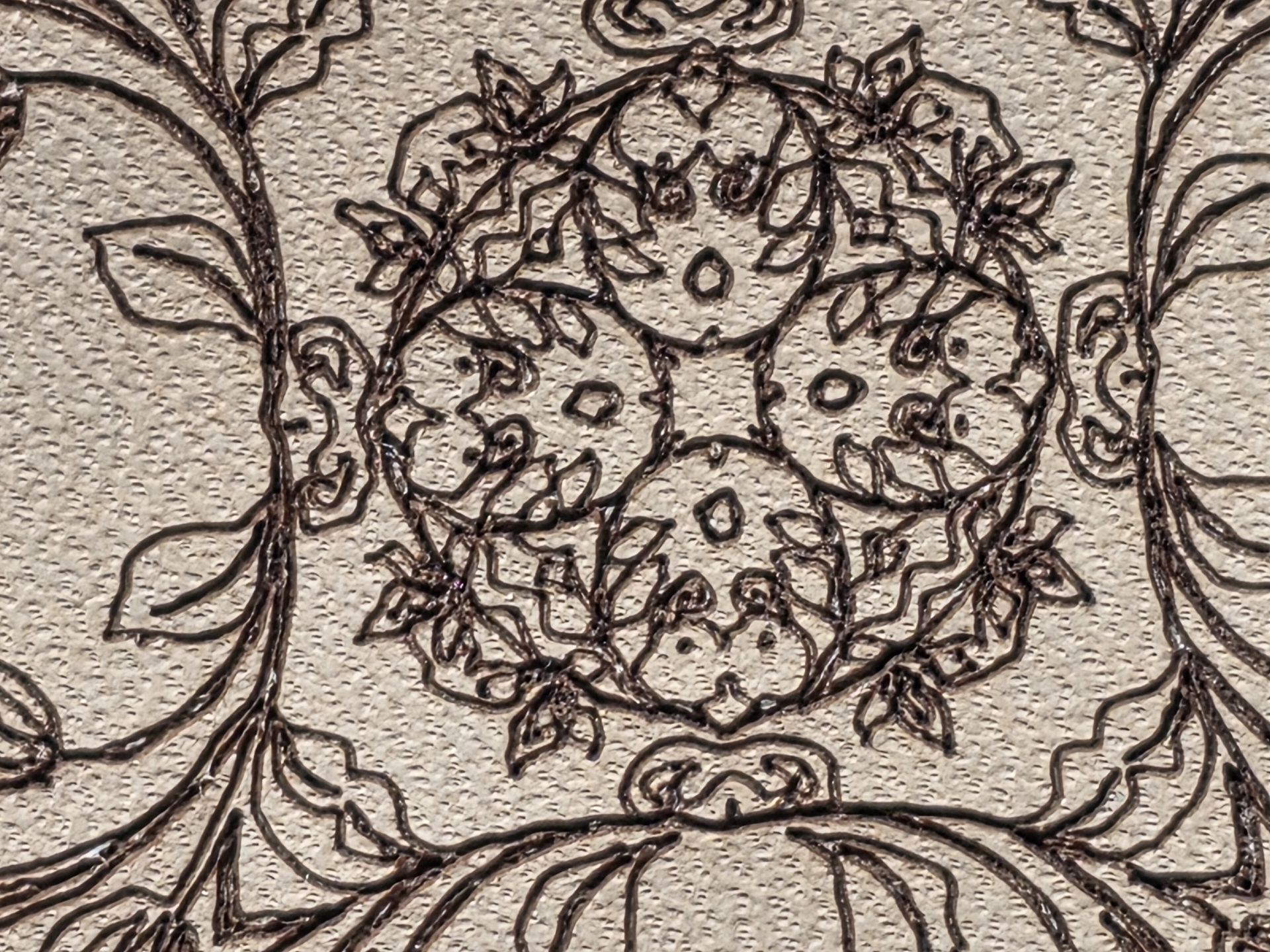
Atomstack S40 (Diode): Exceptional Finesse
There is a massive misconception that desktop diode lasers are just "cheap toys." Looking at the macro shots, the Atomstack S40 absolutely kicks ass. Diode technology has a massive advantage because it can scale down to a true, stable 1% power output while focusing into an incredibly tight, razor-thin spot. This ultra-low power control allows it to trace out intricate filigree and complex shading with flawless precision. The lines stay thin, the tiny gaps between the leaves stay perfectly clean, and the leather remains pristine without any unwanted charring.
• The Verdict: For delicate line art, a hobbyist diode laser delivers sharp, clean lines because it can gently sip power instead of gulping it.
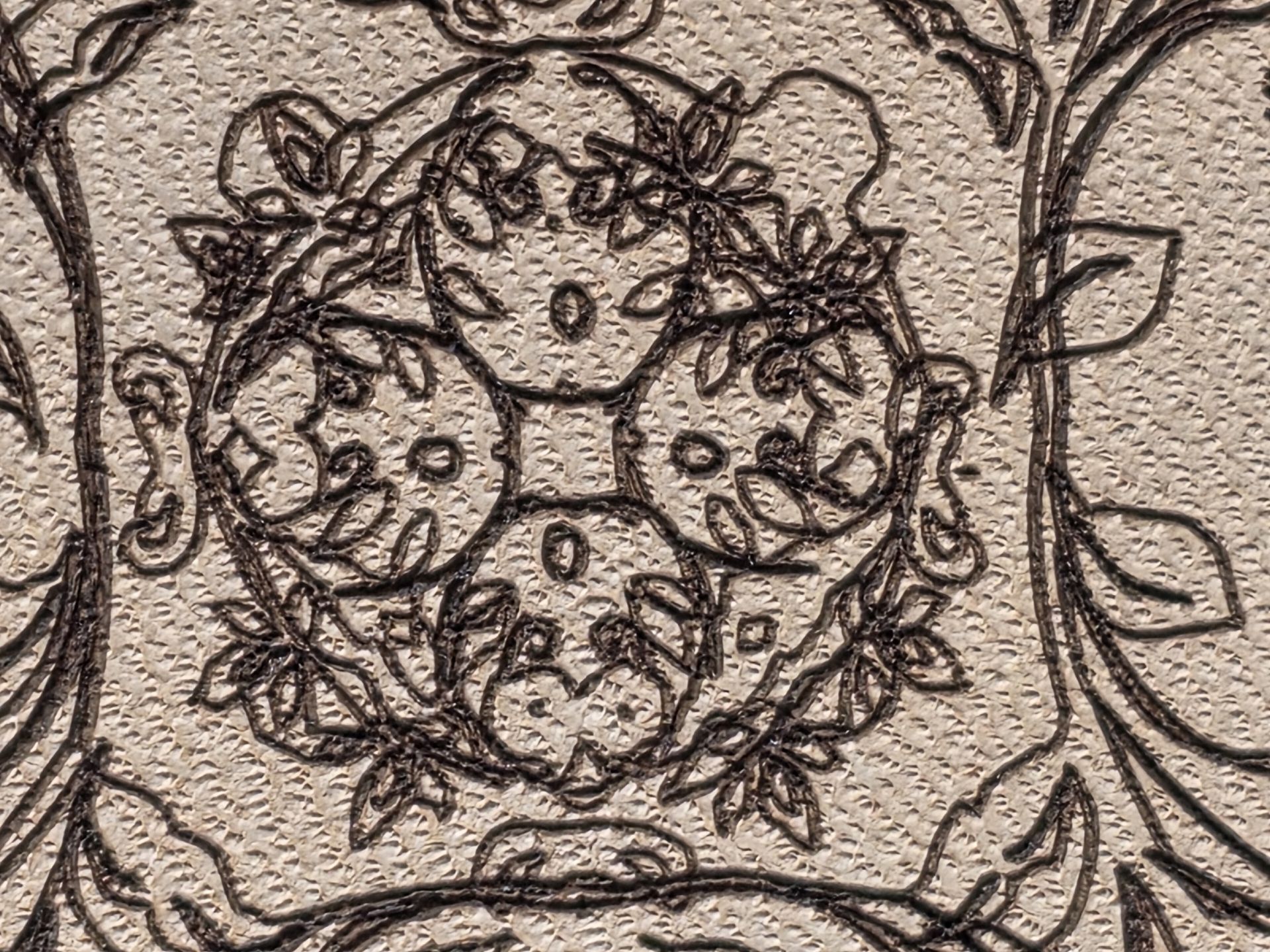
GCC Spirit GLS (RF Synrad Tube): Rich Contrast and Premium Control
Moving into an entirely different price bracket, commercial machines like the GCC Spirit GLS utilize Radio Frequency (RF) metal tubes from Synrad. RF tubes pulse at incredibly high frequencies, giving them exceptional control, though their physical minimum fire threshold sits right around 3% power. The RF tube burns the lines beautifully dark with a deep, rich brown contrast. While the lines are a hair wider than the diode, the intricate details inside the emblem stay remarkably distinct and clean.
• The Verdict: This is the absolute gold standard for high-contrast commercial production. However, the qualitative gap between it and a modern hobby machine isn't nearly as wide as the massive price difference suggests.
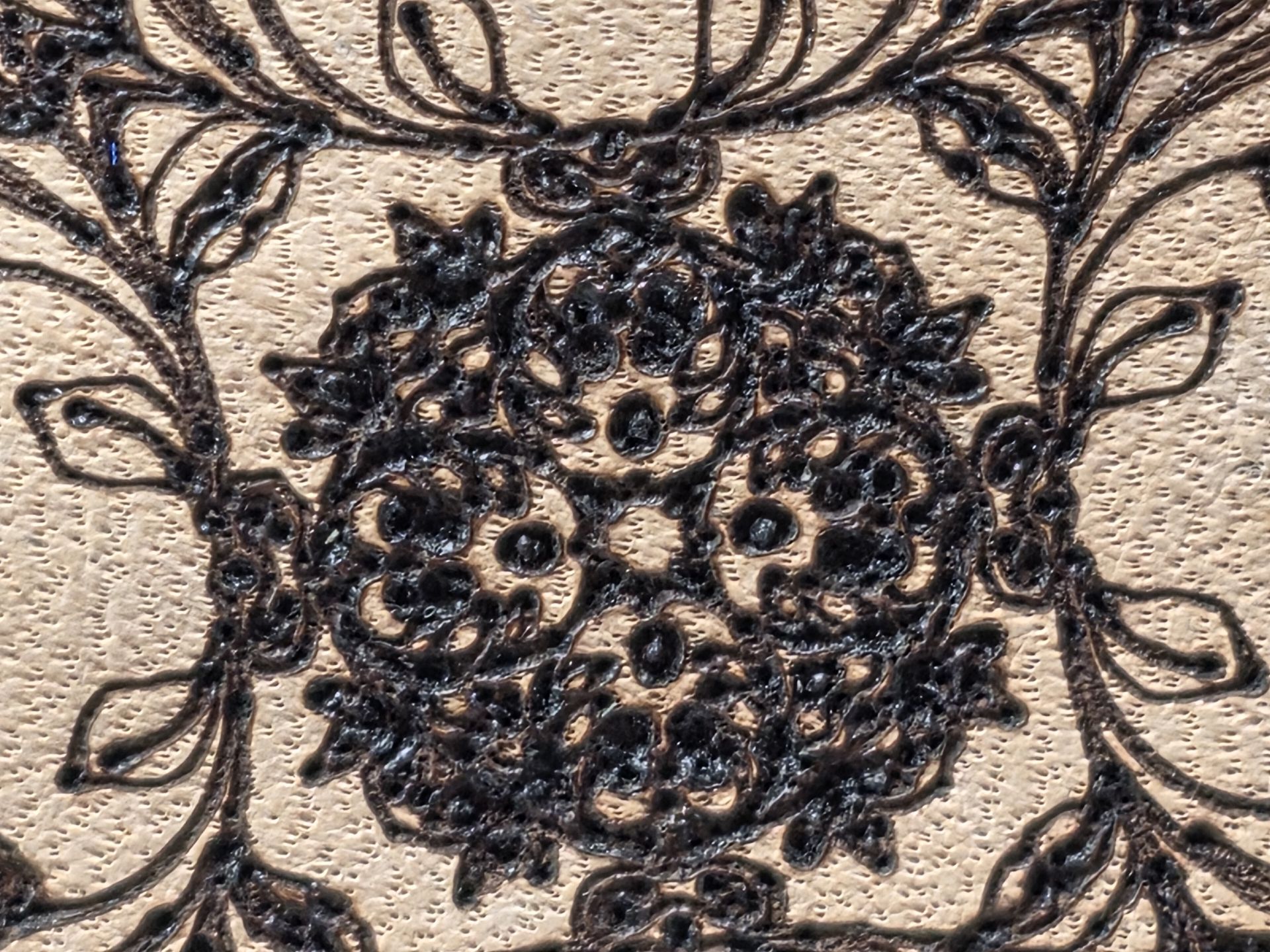
xTool P3 80W (CO2 Glass Tube): A Charred Sledgehammer
The xTool P3 is a magnificent flagship workhorse for cutting, but big CO2 glass tubes carry a notoriously heavy power floor. While the software allows you to type in "1%" (albeit with a warning message), the physics tell a different story. The gases inside a CO2 tube require a high ionization voltage just to charge and strike an arc—firing at a true 1% power is physically impossible.
Because it triggers at a much higher actual output than the software lets on—and only allows whole-number increments above that threshold—using a score setting on the leather unleashes a brutal punch of energy. On the macro photo, you can see the disaster: it blasts a deep, blackened, completely charred canyon into the leather, melting the microscopic internal details away entirely.
• The Verdict: Exceptional for blasting through thick materials or doing bold, heavy branding, but it acts like a total brute when trying to preserve delicate, microscopic artwork.
The Takeaway for Hobbyists
Don't let tool envy stop you from creating. If you own a modern hobby diode laser, you possess an incredibly capable engraving tool. My need to tinker proved that you don't need to drop thousands on industrial gear to get flawless details—your "budget" setup easily out-engraves a massive industrial CO2 tube on fine leather artwork because it has the physical finesse to handle the low end.
Recent Posts