Process
Process
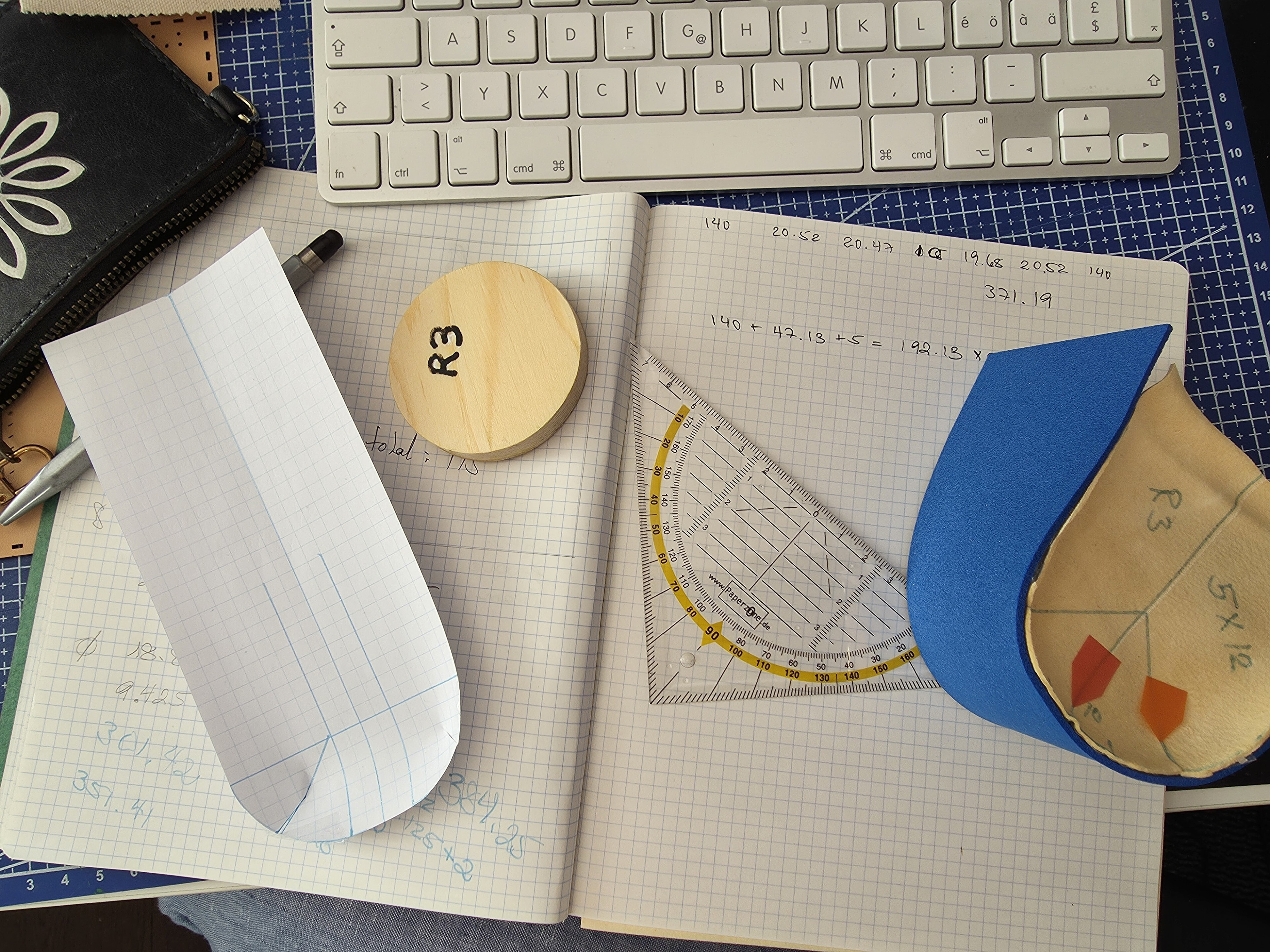
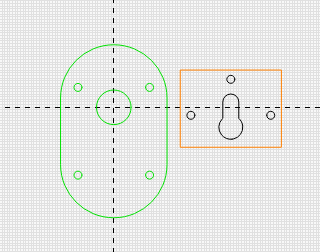
Calculations for the Maison Poursin État Major closure.
Every creation starts long before the first cut of leather or fabric. It begins with a few simple questions: What do I want? What do I need? Why am I not satisfied with my current bag (even if I built it myself)? And just as importantly, feedback from customers and beta testers flows into every new design, ensuring that each piece is tried, refined, and shaped by real everyday use.
Inspiration can strike anywhere – from a quiet soak in the bathtub on a cold winter evening to a stroll through the Swiss landscape. Using the ARIA method (Awareness, Reflection, Insight, Action), I capture these ideas before they fade. From there, I move to rough sketches – often messy, but vital in exploring possibilities. Some sketches are set aside for later; others become the seed of a new design. Friday mornings are sacred: reserved for finishing pending projects, technical spikes, and trying out new ideas.
The next stage is playfully hands-on: I fold and cut paper prototypes to test shapes and functions. My husband and I hold ideation sessions, challenging the design, refining, recalculating, and sometimes completely rethinking it. Once a concept shows promise, I translate it into Lightburn for the first digital outlines, followed by a cardstock prototype to check fit, size, and proportions. This cycle—sketch, test, discuss, refine—repeats until the design feels right.
Every piece is a dance between hand, eye, and machine—part old-school craft, part precise technology, with nothing rushed, nothing repeated, and every detail earning its place.
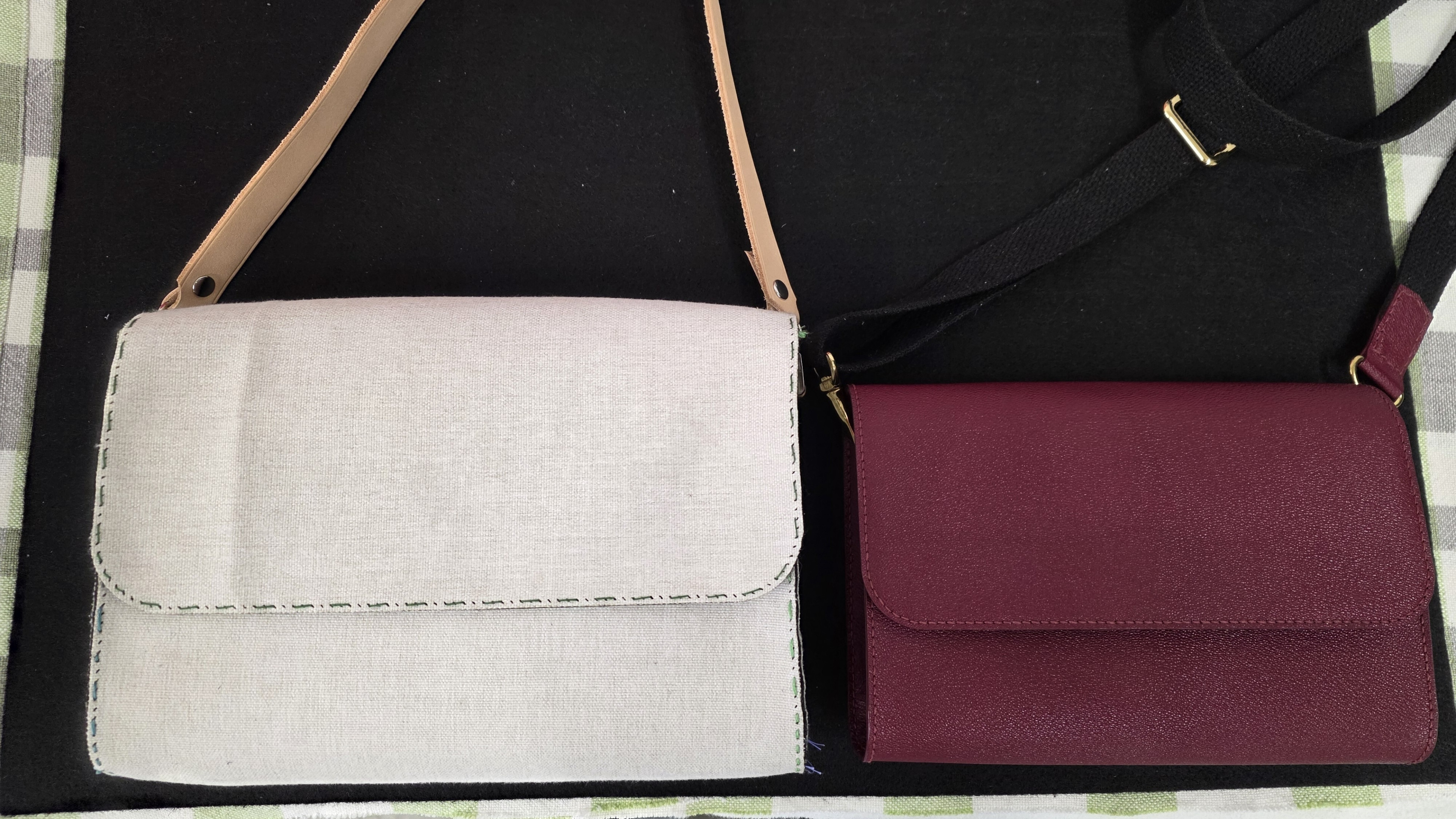
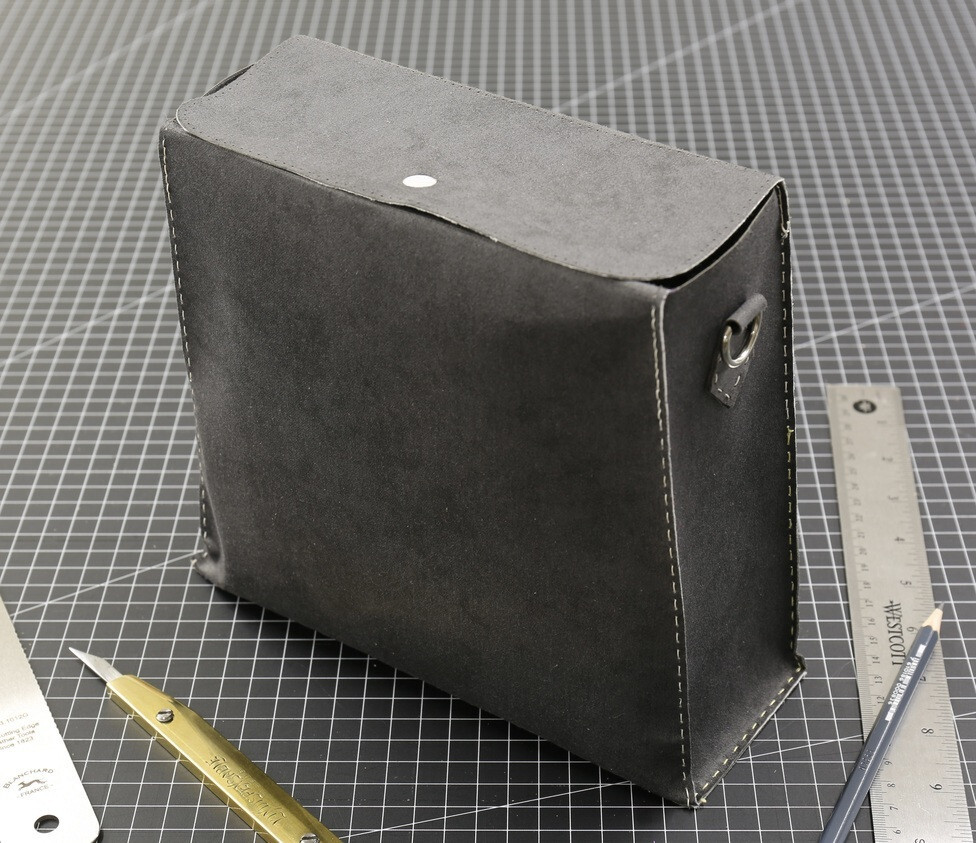
Fabric and leather are treated as equals in this process. I cut fabric entirely by hand, testing drape, weight, and structure before it ever meets the final stitching stage. Paper, cardstock, and fabric prototypes all help me visualize how the final piece will live in the real world. This cycle of sketch, test, discuss, and refine continues until the design feels right.
When the design is ready, the material becomes the protagonist. Carefully selected leathers—from vegetable-tanned hides to Italian dead stock sourced from haute couture suppliers—are cut using a hybrid approach. Some pieces are cut via laser for precision, while larger or chrome-tanned sections are cut and punched entirely by hand. Fabrics are always cut by hand, with patterns and templates sometimes transferred via laser or grid paper for accuracy.
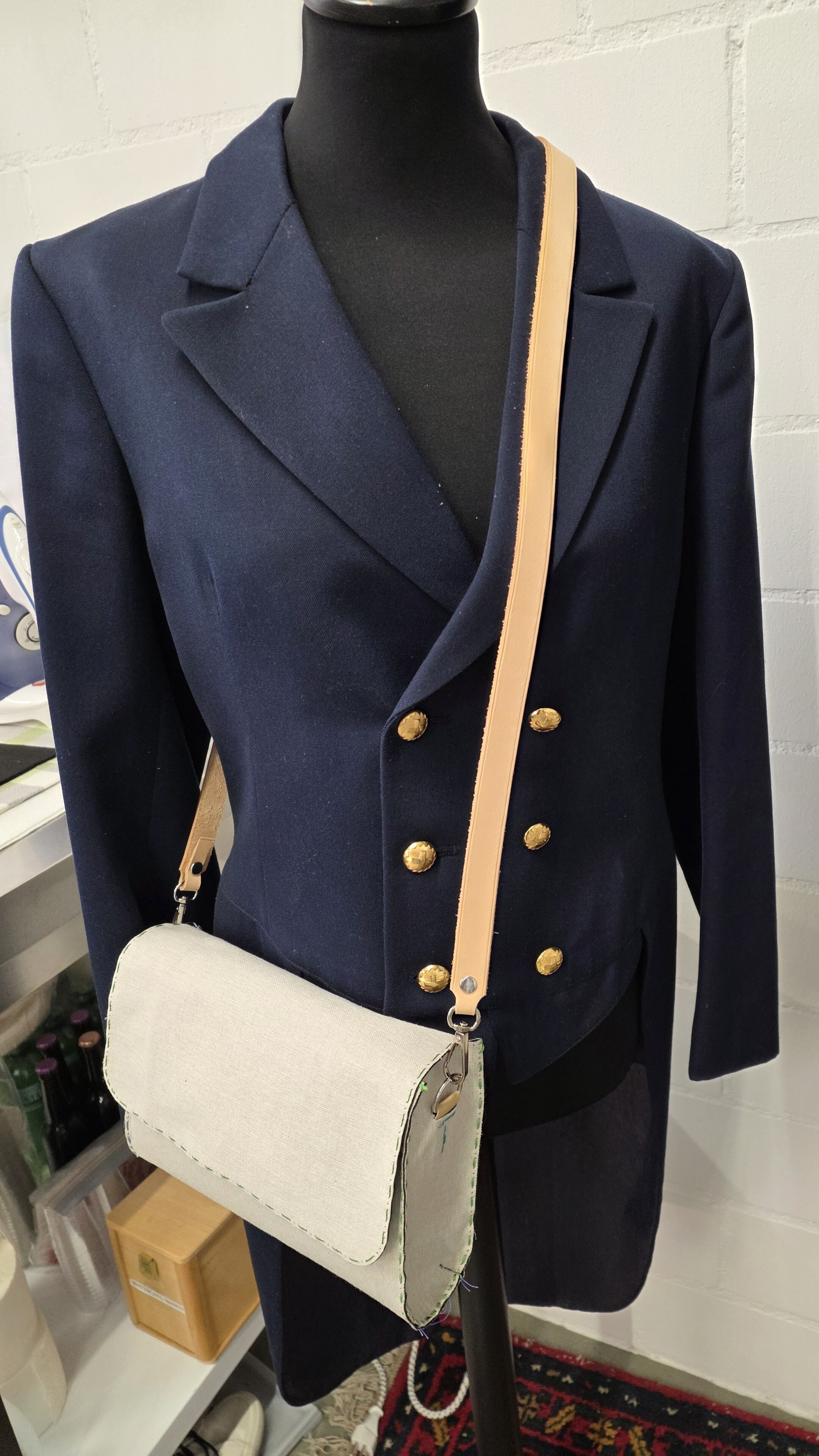
But technology is only the start: assembly is done entirely by my own two hands. I hand-finish edges, stitch using traditional saddle-stitch methods, and apply finishes that give strength and beauty. For hardware, I select stainless steel AISI 304, solid brass, and occasionally Zamak. In very limited supply, I also use solid brass with fine gold finish and even palladium hardware, reserved for the most exclusive bags. These materials are not only beautiful but exceptionally durable.
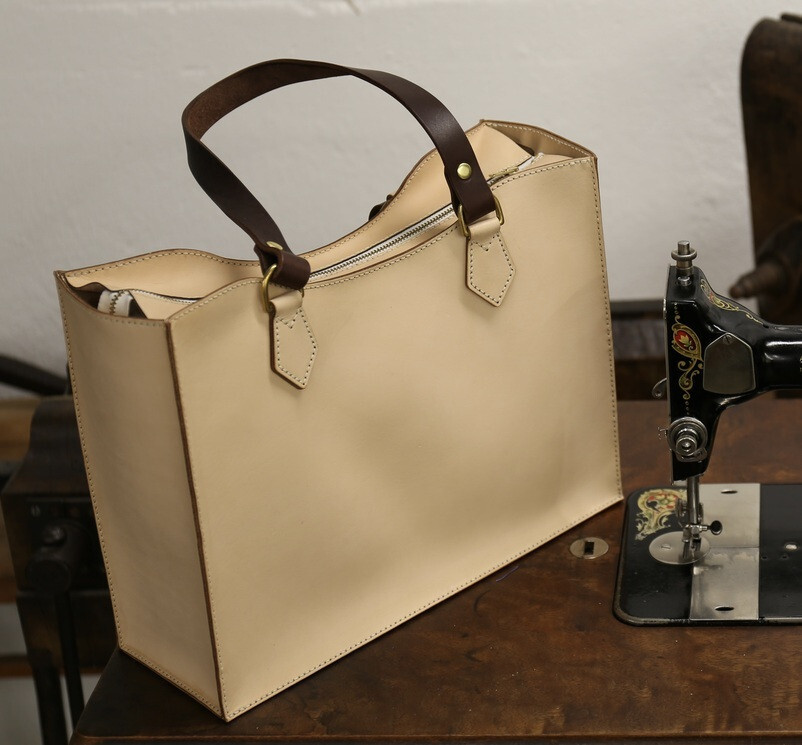
Every finished product carries traces of its past: the life of the hide, the cycle of design, and eventually, your own story. Over time, the leather develops a patina, shaped by the way you use it. This is not mass production. It is slow, intentional work – a mindful process where beauty meets utility, and where every product results from patience, experimentation, and collaboration.
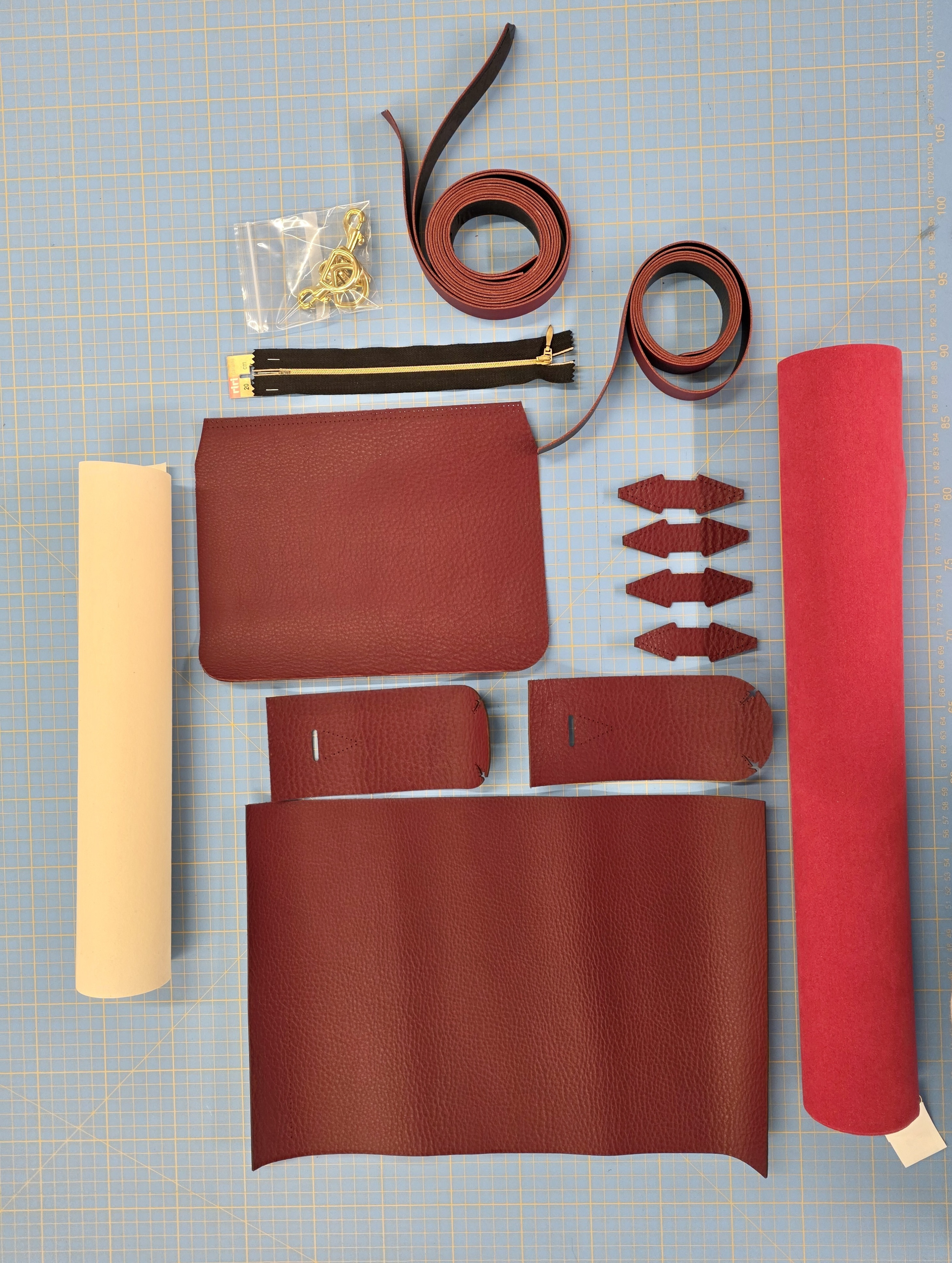
Parts of the "Vreni" ready for the next steps.
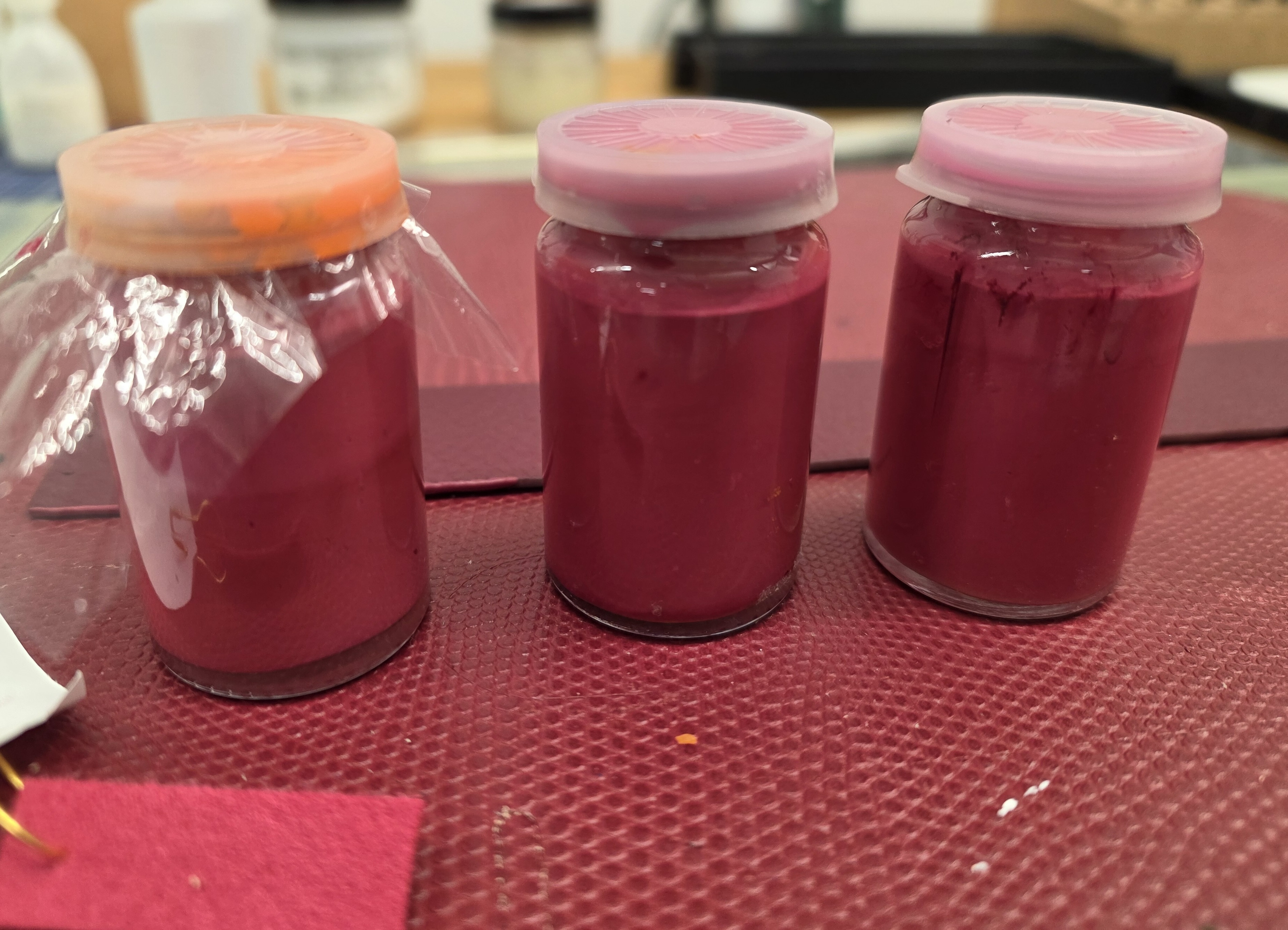
The woes of color matching
Color matching edge paint can be an incredible challenge. The photograph does not capture the subtle differences in each mixing bottle. Even after applying, the color didn’t quite match – I was missing the “pop” in my pink. I finally got close enough by starting with a creamsicle orange and gradually adding red.
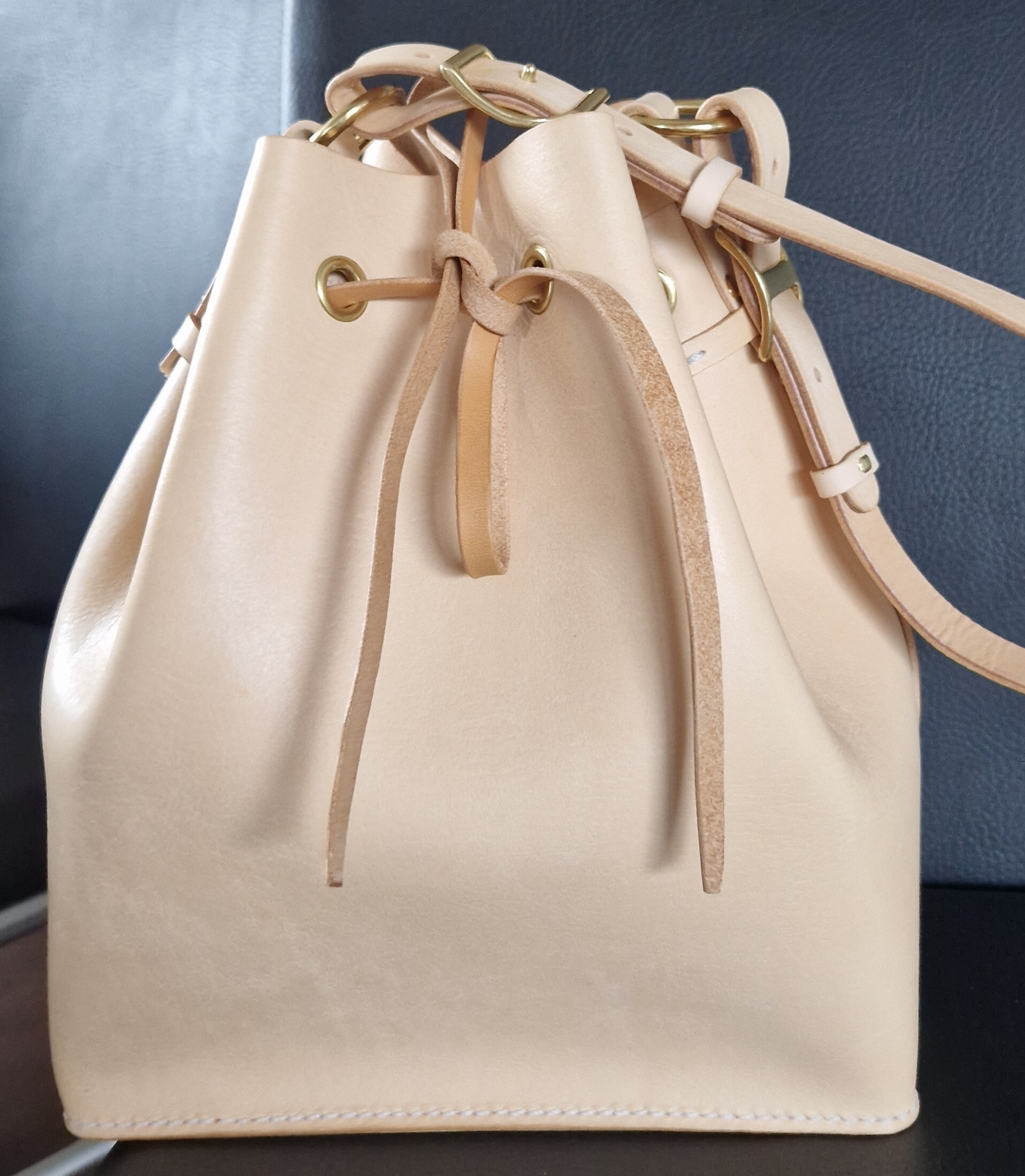
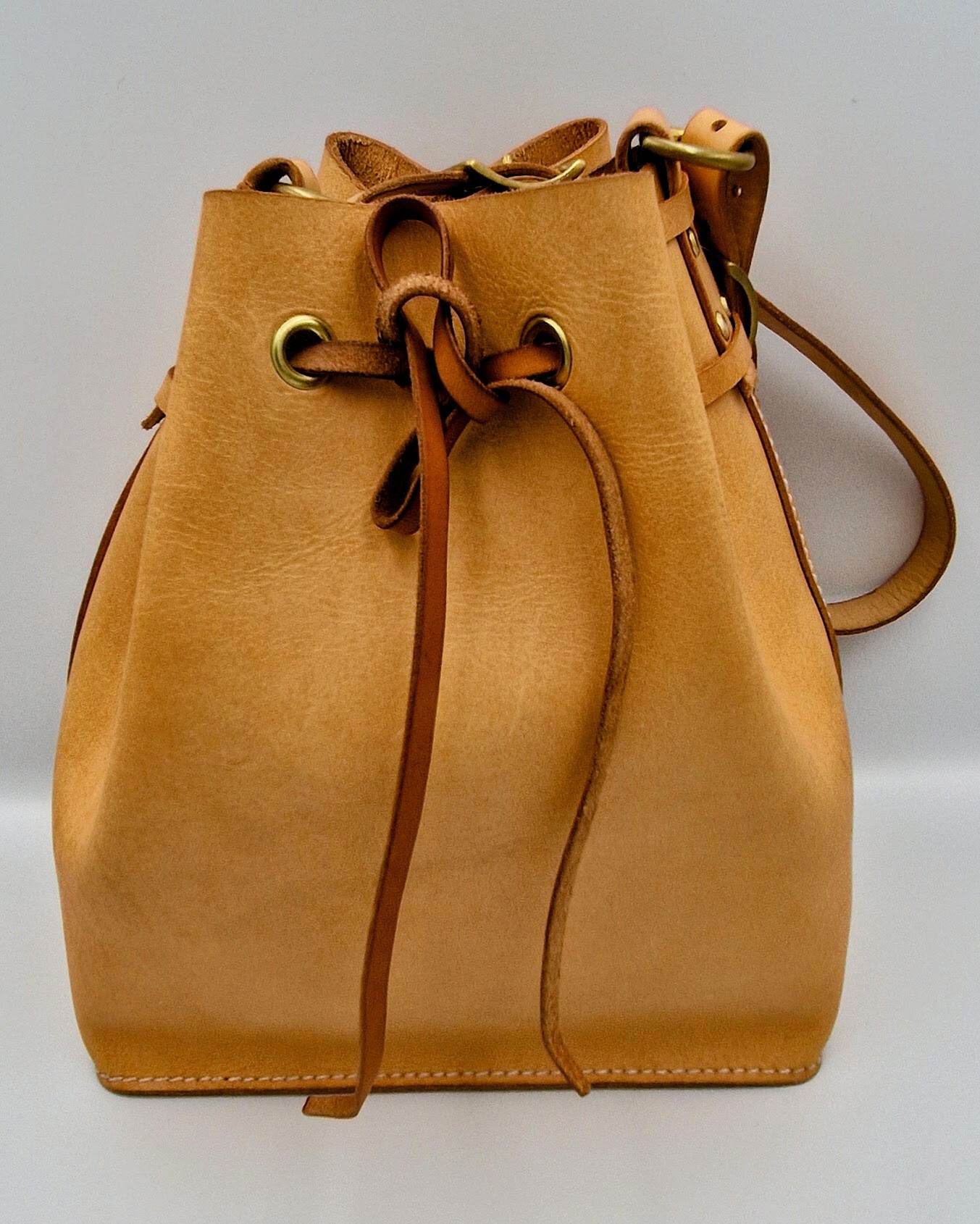
What you see here is a very old build. It is an unrefined version of the bucket available for sale. Made from "classic vachetta" leather, no lining with solid brass hardware. Over time, the leather develops a deeper color and the hardware loses its intensive shine. The coffee stains and water spots are witnesses to my "bad behavior" and will eventually fade into the leather as time goes on. It is hand stitched using a 1 mm Polyester cord by Linhasita.
I really dislike cookies, but cookies are a necessary evil used to provide you with the best possible shopping experience. Use the buttons below to choose if you want to accept or reject all website enhancing cookies. You can change your selection at any time on the Cookie policy page.
Privacy policy